
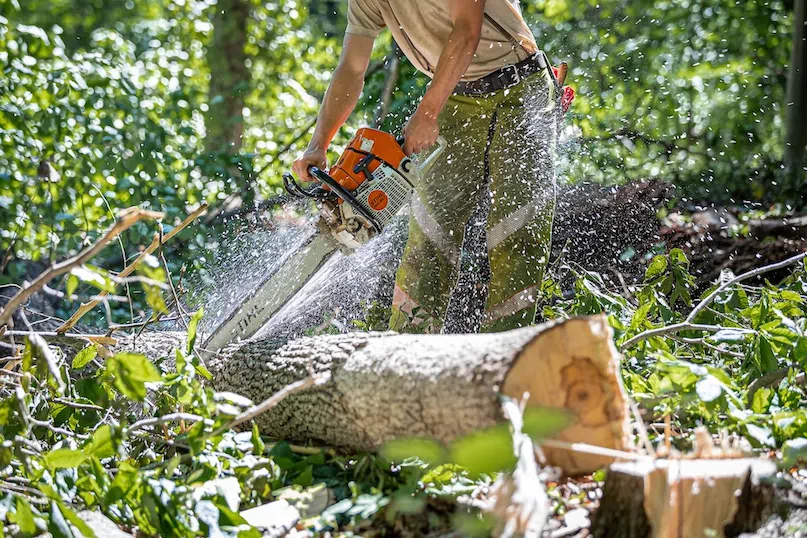
Nottingham is a small village in southern Pennsylvania, not far from the Maryland line. It’s near here that Craig Kretzing owns a tract of land containing about 25 wooded acres. As someone who enjoys the outdoors, he appreciates his land and feels responsible to care for it. He also knows that forests do well when they are harvested from time to time. A few years ago, he decided to pursue a harvest. When he did, he contacted Stoltzfus Forest Products, whose ads his wife had seen in a local paper..
Laying the groundwork
Looking back, he’s glad he connected with the company. It’s been a couple of years now, but he still recalls the first conversation he had with Chris Figgs, one of the company foresters. Craig said he was impressed with him from the beginning. One reason was that he could tell that Chris wasn’t just interested in figuring out how many trees he could buy. Instead, he seemed to have a stewardship mindset–one that balances today’s results with care for tomorrow’s trees.
As their conversations continued, Chris talked to Craig about a multigenerational approach–how to harvest without taking too much at once. He explained that sustainable forestry is like getting onto a harvesting cycle. And one benefit of that cycle is that no single harvest has a drastic effect on how the forest looks. Some trees, even good ones, should be left for later.
When they began talking about which trees to take and which to leave, Craig was surprised that Chris recommended leaving some of those that Craig thought were good for timber. Chris explained that not only should some good trees be left for forest health, but some valuable-looking trees are not worth harvesting if market prices aren’t ideal–better to leave them for later, he said.
Working toward pricing
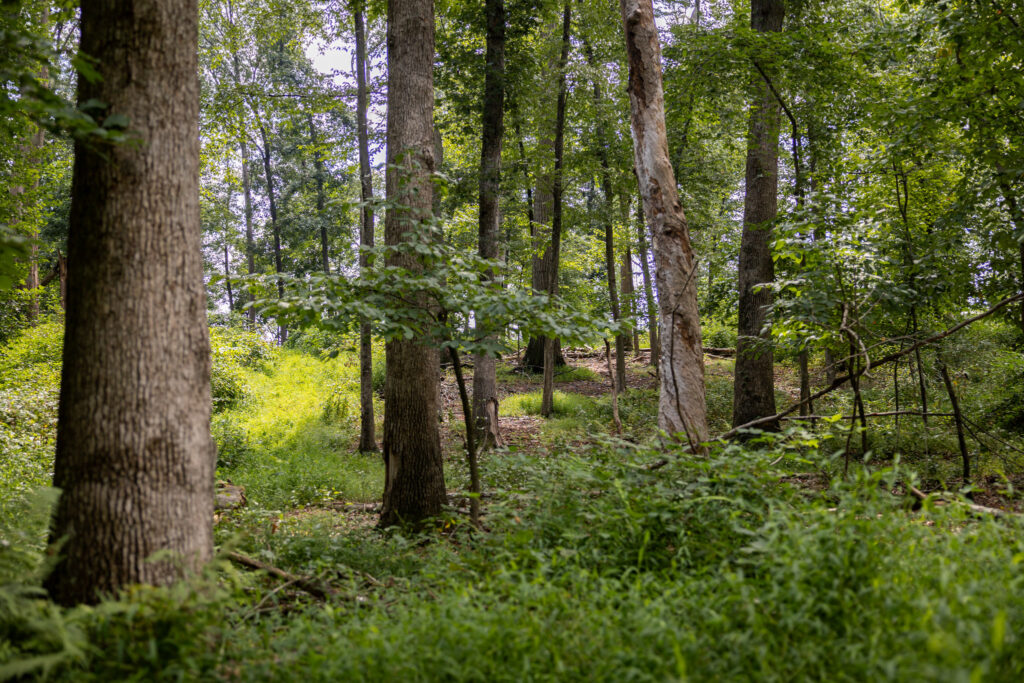
With a preliminary plan in place, Chris walked the property and began to develop a price. As they moved toward this, Craig appreciated the transparency Chris showed in how he calculated the numbers. To understand the importance of this transparency, it’s helpful to know the difference between a consulting forester and a company forester.
Many timber harvests are conducted under the guidance of a knowledgeable, consulting forester who is hired by a landowner. This gives the landowner some assurance that they will get a fair price. But consulting foresters come at a cost—payment for the service is deducted from the sale price.
In contrast, Stoltzfus uses staff foresters. This saves buyers from paying for one, and the savings can be substantial. But without a third party, some landowners may wonder if they will get a fair price.
In Craig’s case, any concerns he may have had faded when Chris directed him to the Penn State Timber Market Report. This is a quarterly list produced by Penn State that tracks the average price per species over a three-month period. This list let Craig know that the number he was quoted wasn’t picked at random but was based on current prices.
Along with walking the property, marking the trees, and establishing a price, Chris developed a detailed harvest plan. This plan included details for what would be cut, how the crews would gain access, how erosion would be managed, and what the final cleanup would involve.
Harvesting
Once Craig approved the price and plan, his work was scheduled. When it was time, the Stoltzfus crew arrived and spent about a month at Craig’s property. Felling the trees went fairly quickly, while skidding and loading took a bit more time. Craig, who enjoys machinery, enjoyed the skill of the crew and the equipment they used. He was often surprised at how the crew could get into seemingly impossible places.
Like most projects of this scale, there were some challenges. A long-time tenant who lived on the property was concerned about the removal of a certain tree. But the crew worked through the situation and was able to resolve it.
One common worry among landowners is how the property will look after a harvest. From the beginning, Craig knew that cutting and hauling trees would make an impact on the ground and on the appearance of his woods. With the heavy machinery needed, he expected some ruts and mud.
After the fact
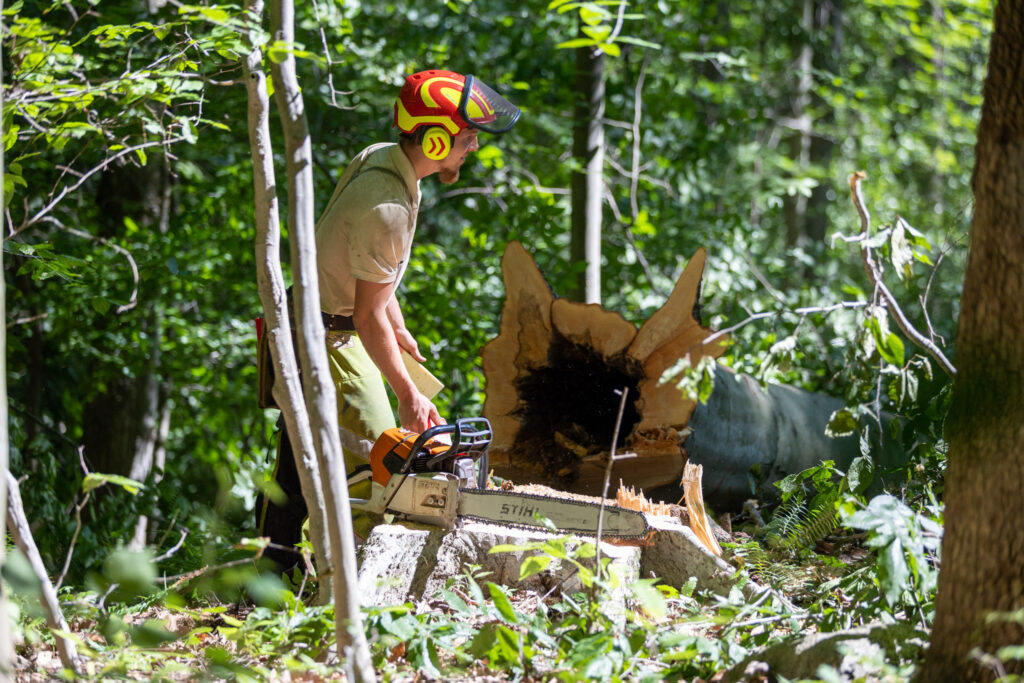
Craig noted that the woods were indeed more open after the harvest, but Chris had explained that regrowth would be rapid—and it was. It’s been two or three years now, and the forest floor has already grown back, like Chris had said it would.
As for cleanup, Stoltzfus handled grading, reseeding, and erosion mitigation with ease. Based on their proficiency, Craig could tell that they had done this a few times before. Because he wanted firewood, he had asked to have the tree tops left behind, and the crew happily obliged.
While Chris was involved mostly at the beginning, he also helped out at the end. Craig had known that the timber he had sold would be taxed as income. But his accountant told him he would only be taxed on how much the timber had increased in value since he purchased his property. This was good news but also daunting. How would he determine that?
Chris came to his aid. He gathered the information he needed and then ran some calculations to determine the value of the cut timber. His extra effort saved Craig significantly when it came to tax time.
Looking back
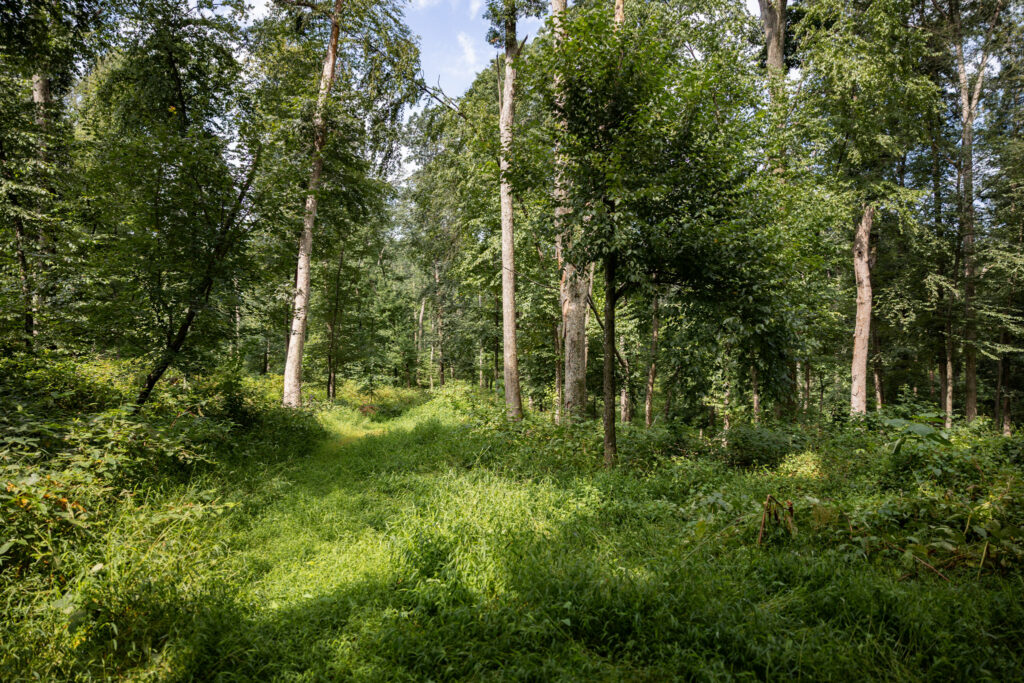
For Craig, the benefits of harvesting extended far beyond immediate income and responsible land management. “One unexpected benefit,” he says, “is that now I have access to parts of my property I couldn’t reach before. Logging roads opened it up for hiking and birding, and I’m outside as much as I can be.”
He has one insight he learned from Chris that he likes to share with those thinking of cutting timber. “I think a lot of landowners assume their trees are worth what lumber costs at the store,” Craig says. “But you don’t always realize the amount of service, processing, and expense that goes into turning a tree into finished lumber.”
Remembering his experience, Craig is pleased with his decision to work with Stoltzfus. He went into the process for financial and stewardship reasons. In the end, he found a partner who treated his forest like its own, guided him through what could have been a confusing process, and left him with a property that’s healthier for the long run. He liked the crew so much that he even asked them to come back later and do more work for him.
As far as he is concerned, the experience was an all-around win.